The miracles of Jesus stand as the defining demonstrations of His divine nature and mission. The Gospel accounts record numerous instances where Jesus displayed power over nature, disease, death, and spiritual forces—acts that revealed not merely compassion but absolute authority over creation itself. These weren’t stage tricks or exaggerated tales. They were public events witnessed by crowds, documented by multiple sources, and powerful enough to transform skeptics into believers willing to die for what they had seen.
The Miracle at Cana: Turning Water into Wine
The Gospel of John records Jesus’ first public miracle at a wedding feast in Cana of Galilee. When the hosts ran out of wine—a serious social failure that would have brought shame on the family—Mary brought the problem to her son. Jesus instructed servants to fill six stone water jars, each holding twenty to thirty gallons, with water. What came out was wine, and not just any wine. The master of the banquet, unaware of its origin, remarked that while most hosts serve the good wine first and cheaper wine later when guests are too drunk to notice, this host had saved the best for last.
This miracle reveals several things about Jesus’ nature and mission. He transformed approximately 120 to 180 gallons of water into premium wine in an instant—a demonstration of creative power on a massive scale. The choice to perform this miracle at a wedding feast, preventing social disgrace for an ordinary family, shows His concern for human joy and celebration, not just suffering and disease. The symbolism runs deeper still. Jesus took something common and necessary—water—and transformed it into something associated with abundance, celebration, and covenant. This foreshadowed the transformation He would bring to humanity itself, changing ordinary lives into something extraordinary through His message and sacrifice.
The Healing of the Blind Man
John’s Gospel describes an encounter that demonstrates both Jesus’ power and His challenge to religious assumptions. Jesus and His disciples came upon a man who had been blind from birth. The disciples asked whose sin had caused this—the man’s or his parents’—reflecting the common belief that suffering always resulted from specific sin. Jesus rejected this framework entirely, saying the man’s blindness existed so that God’s works might be revealed in him.
The healing method itself was unusual. Jesus spat on the ground, made mud with the saliva, and spread it on the man’s eyes. He then told him to wash in the Pool of Siloam. When the man obeyed, his sight was completely restored. This wasn’t gradual improvement or partial healing—a man blind from birth could suddenly see. The miracle sparked controversy among the Pharisees, who interrogated the healed man, his parents, and ultimately expelled him from the synagogue for insisting Jesus had healed him. Jesus later found him and revealed Himself as the Son of Man, and the man worshiped Him. This miracle demonstrates Jesus’ authority not just over physical ailments but over religious systems that prioritized rules over human need. It serves as a metaphor for spiritual blindness—the man born physically blind received sight and recognized Jesus’ identity, while the religious leaders who possessed physical sight remained spiritually blind, unable to recognize the Messiah standing before them.
The Feeding of the Five Thousand
All four Gospels record this miracle, making it one of the most thoroughly documented events in Jesus’ ministry. A crowd of over five thousand men, plus women and children, had followed Jesus to a remote area to hear Him teach. As evening approached, the disciples urged Jesus to send the people away so they could buy food in nearby villages. Jesus instead told the disciples to feed them. They protested that they only had five small barley loaves and two fish—a boy’s lunch, hardly enough for a handful of people, let alone thousands.
Jesus took the loaves and fish, gave thanks, and began distributing food to the crowd. The food multiplied as it was distributed. Everyone ate until they were satisfied, and when the disciples gathered the leftovers, they filled twelve baskets—more than what they had started with. This wasn’t stretching limited resources or convincing people they weren’t hungry. This was the creation of matter, the multiplication of physical substance through divine power. The miracle demonstrated Jesus’ authority over the natural order and His compassion for human need. It also carried theological significance. Jesus later identified Himself as the “bread of life,” drawing the connection between physical nourishment and spiritual sustenance. Just as He could satisfy physical hunger with miraculous abundance, He offered spiritual nourishment that would satisfy the deepest longings of the human soul.
The Raising of Lazarus
The raising of Lazarus from the dead stands as one of the most dramatic demonstrations of Jesus’ power. Lazarus, a close friend of Jesus and brother to Mary and Martha, fell ill. The sisters sent word to Jesus, expecting Him to come immediately and heal their brother. Instead, Jesus deliberately delayed, stating that the illness would not end in death but would bring glory to God. By the time Jesus arrived in Bethany, Lazarus had been dead for four days and was already buried in a tomb.
Martha met Jesus outside the village, expressing her faith that if He had been there, her brother would not have died. Jesus told her, “I am the resurrection and the life. The one who believes in me will live, even though they die; and whoever lives by believing in me will never die.” When Jesus reached the tomb, He was deeply moved by the grief of Mary and the mourners. He ordered the stone removed from the tomb entrance. Martha protested that after four days there would be a terrible odor, but Jesus reminded her that if she believed, she would see God’s glory. Jesus prayed aloud, thanking the Father for hearing Him, then called in a loud voice, “Lazarus, come out!” The dead man emerged from the tomb, still wrapped in burial cloths.
This miracle transcends the category of healing. This was resurrection—the reversal of death itself after decomposition had begun. It validated Jesus’ claim to be the resurrection and the life, demonstrating that death itself had no power over Him. The timing was crucial. By waiting until Lazarus had been dead for four days, Jesus eliminated any possibility that the man had merely been unconscious or in a coma. The miracle was undeniable, witnessed by many, and so powerful that the religious leaders began plotting Jesus’ death, recognizing that if they left Him alone, everyone would believe in Him.
Jesus Walks on Water
After feeding the five thousand, Jesus sent His disciples ahead by boat across the Sea of Galilee while He went up a mountain to pray alone. During the night, a storm arose, and the disciples struggled against the wind and waves. Between three and six in the morning, they saw a figure walking toward them on the water. Terrified, thinking it was a ghost, they cried out in fear. Jesus called to them, “Take courage! It is I. Don’t be afraid.”
Peter, impulsive as always, asked Jesus to command him to come out on the water. Jesus simply said, “Come.” Peter stepped out of the boat and walked on the water toward Jesus. For a moment, he did the impossible—a grown man walking on the surface of a stormy sea. But when he focused on the wind and waves instead of Jesus, fear overwhelmed him and he began to sink. He cried out for help, and Jesus immediately caught him, saying, “You of little faith, why did you doubt?” When they climbed into the boat, the wind died down, and those in the boat worshiped Jesus, declaring, “Truly you are the Son of God.”
This miracle demonstrates Jesus’ mastery over natural forces. Water couldn’t support His weight because He chose otherwise. The physical laws that govern matter bent to His will. The miracle also serves as a profound illustration of faith. Peter accomplished the impossible as long as he kept his focus on Jesus, but the moment he fixated on the threatening circumstances, he faltered. The lesson extends beyond the physical event—faith enables believers to do what seems impossible, but that faith must remain fixed on Christ rather than on the intimidating circumstances surrounding them.
The Miracle of Driving Out Demons in the Gadarenes
When Jesus and His disciples arrived in the region of the Gadarenes on the eastern shore of the Sea of Galilee, they were immediately confronted by a man possessed by demons. This wasn’t mild mental illness or eccentric behavior. The man lived among the tombs, unable to be restrained even with chains, which he would break apart. He wandered day and night among the burial caves and hills, crying out and cutting himself with stones. The local community had given up on him, unable to control him or help him.
When the man saw Jesus from a distance, he ran and fell before Him. The demons within him cried out, recognizing Jesus as the Son of the Most High God and begging Him not to torture them. Jesus commanded the unclean spirits to come out, and when He asked their name, they replied, “My name is Legion, for we are many.” The demons begged Jesus not to send them out of the region but to allow them to enter a large herd of pigs feeding on a nearby hillside. Jesus gave them permission. The demons left the man and entered the pigs, and the entire herd—about two thousand animals—rushed down the steep bank into the sea and drowned.
The herdsmen fled and spread the news throughout the surrounding countryside. When people came to see what had happened, they found the formerly possessed man sitting calmly, fully clothed and in his right mind. The transformation was so complete and the miracle so unsettling that the people begged Jesus to leave their region. As Jesus was getting into the boat, the healed man begged to go with Him, but Jesus sent him home with instructions to tell his family and community what the Lord had done for him.
This miracle demonstrates several crucial aspects of Jesus’ authority. First, it shows His complete power over the spiritual realm. An entire legion of demons—potentially thousands of evil spirits—was subject to His command. They couldn’t resist, couldn’t negotiate, could only beg for the smallest mercy. Second, it reveals Jesus’ compassion for those society has abandoned. This man was beyond human help, feared and isolated, reduced to an animal existence among the tombs. Jesus restored not just his sanity but his humanity, his dignity, and his place in community. Third, the destruction of the pigs demonstrates the malevolent nature of evil spirits and the real danger they pose. Given freedom to act, they immediately drove their hosts to destruction.
The Miracle of Healing the Ten Lepers
As Jesus traveled along the border between Samaria and Galilee, He entered a village where ten men with leprosy approached Him. Due to their condition, which rendered them ceremonially unclean and socially isolated, they stood at a distance and called out, “Jesus, Master, have mercy on us!” Leprosy in the ancient world was a catch-all term for various skin diseases, many of which were disfiguring, contagious, and incurable. Lepers were required to live outside the community, announce their presence by crying “unclean,” and could not approach healthy people. They lost their families, their livelihoods, and their religious community all at once.
Jesus didn’t touch them or say a healing word. He simply told them to go show themselves to the priests, as Jewish law required for someone claiming to be healed of leprosy before they could be readmitted to society. As the ten men obeyed and started on their way, they were healed. Their diseased skin was restored, and they were made clean. One of them, when he saw he was healed, came back praising God loudly. He threw himself at Jesus’ feet in gratitude. This man was a Samaritan—a member of a group Jews typically despised and avoided.
Jesus asked, “Were not all ten cleansed? Where are the other nine? Has no one returned to give praise to God except this foreigner?” Then He said to the man, “Rise and go; your faith has made you well.” The miracle itself demonstrates Jesus’ power over disease and His compassion for the marginalized. But the response of the ten men adds another layer of meaning. All ten were healed, but only one returned to worship and give thanks—and he was the despised outsider, not one of the nine Jews who might have been expected to recognize the work of Israel’s Messiah. Jesus highlights this, noting that gratitude and recognition of God’s work can be found where it’s least expected, while those who should know better often take God’s gifts for granted.
The Greatest Miracle of Jesus: The Resurrection
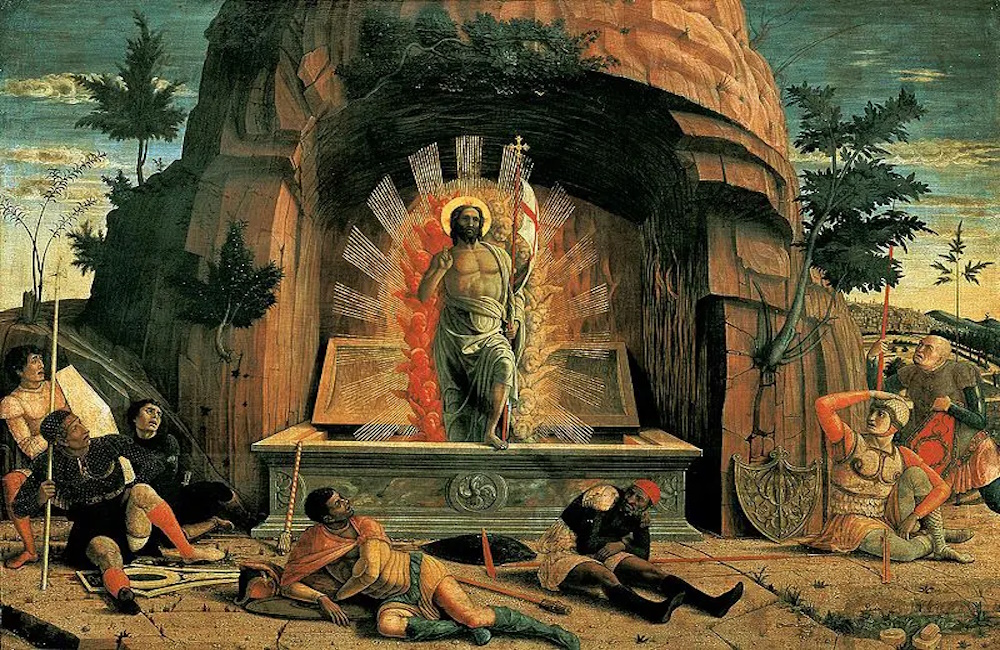
Every miracle Jesus performed pointed toward the ultimate demonstration of His divine nature and authority: His own resurrection from death. After His crucifixion on Friday, Jesus’ body was placed in a sealed tomb with a Roman guard posted to prevent anyone from stealing it. His disciples were scattered, hiding in fear for their own lives, devastated that their hopes for a messiah had apparently ended with His execution as a common criminal.
On Sunday morning, women who came to anoint Jesus’ body found the tomb empty. Angels announced that He had risen from the dead. Over the next forty days, Jesus appeared multiple times to His disciples and to groups of followers—on one occasion to over five hundred people at once. He wasn’t a ghost or a vision. He ate food, invited Thomas to touch His wounds, walked and talked with disciples on the road to Emmaus, cooked breakfast for Peter and others at the Sea of Galilee. These weren’t brief glimpses that could be dismissed as hallucinations. They were sustained encounters with a physically resurrected Jesus.
The resurrection validates everything Jesus claimed about Himself. He had predicted His death and resurrection repeatedly, and now He had delivered on that promise. It demonstrated that His sacrifice for humanity’s sins had been accepted by God and that death itself had been defeated. For His followers, it transformed everything. They went from terrified, scattered deserters to bold proclaimers willing to die for their testimony that Jesus had risen from the dead. And many of them did die for that testimony—martyred because they refused to recant what they had witnessed.
The resurrection isn’t simply the greatest of Jesus’ miracles because of its scale or dramatic impact. It’s the greatest because it accomplishes what all other miracles pointed toward. Every healing foreshadowed the ultimate healing of death itself. Every raising of the dead—the widow’s son, Jairus’s daughter, Lazarus—anticipated Jesus’ own victory over the grave. The resurrection provides the foundation for Christian hope. If Jesus rose from the dead, then His promises about eternal life can be trusted. If He conquered death, then death no longer has the final word for those who believe in Him. If the grave couldn’t hold Him, then it won’t hold those who belong to Him.
Conclusion
The miracles of Jesus weren’t performed to entertain crowds or build His reputation. They were strategic demonstrations of His divine authority and compassion, each revealing something essential about His identity and mission. They validated His claims to be the Son of God by showing His power over nature, disease, death, and spiritual forces. They expressed His compassion for human suffering in all its forms—physical illness, social isolation, demonic oppression, even death itself. And they pointed toward the ultimate redemption He would accomplish through His death and resurrection.
These miracles continue to matter because they establish the credibility of Jesus’ claims. Anyone can declare themselves divine, but Jesus backed up His claims with demonstrations of power that no mere human could replicate. The miracles were public, witnessed by believers and skeptics alike, performed in ways that eliminated natural explanations. They transformed not just individuals but entire communities, creating a movement that changed the course of human history. For Christians, these miracles aren’t ancient legends but historical events that confirm Jesus’ identity as the Son of God and the Savior of humanity, providing the foundation for faith in His power to transform lives today just as He transformed them two thousand years ago.