
The Gift of Salvation in Christ
From the very beginning, humanity has struggled with wrong choices. We lie when it is easier than telling the truth, we take what is not ours, we envy what others have, and we hurt one another with pride or anger. These are not isolated failures but symptoms of a deeper condition—a separation from God that we cannot bridge through our own efforts. No matter how hard we try, how many resolutions we make, or how sincerely we attempt to improve ourselves, our hearts are often led astray, and we cannot fix ourselves.
This is why God sent Jesus Christ. Through his life, lived in perfect obedience, he demonstrated what humanity was meant to be. Through his death on the cross, he took upon himself the punishment our rebellion deserved. Through his resurrection, he conquered death itself, proving his sacrifice was acceptable to God. He offers forgiveness for all our faults and a way to be made right with God that depends not on our performance but on his finished work. Only in him can our hearts find true peace, our guilt be lifted, and our souls be restored to their intended purpose. Anything that tries to take the place of this gift—any teaching that denies Jesus as God or misunderstands his sacrifice—pulls people away from the life and hope that he alone gives. Understanding how these deceptions work is essential for anyone who desires to walk in truth.
Early Heresies: Distortions Within the Church
Almost immediately after Christ’s resurrection, voices arose that sought to twist the truth of salvation. Within the Christian community itself, groups began to question the nature of Jesus, not out of honest inquiry but driven by human pride and philosophical speculation.
Arians claimed Jesus was merely a created being—the first and greatest of God’s creations, but not truly God himself. This teaching spread rapidly because it appealed to human reason, but in making Christ less than fully divine, Arianism destroyed the very possibility of salvation. If Christ is not God, then his death was merely the death of a good man, unable to pay the infinite debt owed by humanity’s sin.
Nestorians divided him into two separate persons, human and divine, as if the mystery of the Incarnation could be dissected by human reasoning. This split Christ in two, creating a schizophrenic savior who could not truly unite humanity with divinity. If Christ is two persons, then his death was the death of the human person while the divine remained untouched—and humanity remains unsaved.
Monophysites insisted that Christ had only a single, divine nature, denying the fullness of his humanity. If Christ was not truly human, then he did not truly suffer, did not truly die, and could not truly represent humanity before God. A Christ who is not fully human cannot save humans.
These early distortions were not mere intellectual debates. They threatened the very foundation of salvation, which rests in Christ as fully God and fully man. By confusing believers about who Jesus truly is, these teachings obscured the source of life and reconciliation with God, leading hearts away from the truth.
Gnosticism: A Radical Rejection of God’s Way
Alongside these heresies arose a more radical movement: Gnosticism. Unlike disputes over Christ’s nature, Gnosticism rejected the very means by which humanity is saved. It taught that salvation came not through faith in Christ and the mercy of God, but through secret knowledge—gnosis—that only a select few could attain. The Gnostics divided humanity into spiritual elites who could be saved through knowledge and the masses trapped in ignorance. It painted the material world, God’s creation, as inherently flawed or evil—not merely fallen but fundamentally corrupt from its creation. The physical universe was supposedly created by a lesser, ignorant deity, not the true God. The human body was viewed as a prison to be escaped rather than redeemed.
Gnosticism promised enlightenment through hidden wisdom rather than through Christ’s redeeming work. It appealed to human pride—the desire to be part of an elite group with special understanding, to achieve salvation through one’s own insight rather than depending on God’s mercy. Those drawn to Gnosticism were seduced by the illusion of understanding, yet they strayed from the one path that grants eternal life. What appears enlightening may in fact obscure the true source of salvation in Christ.
Islam: A Later Deception
Centuries later, a new system of belief arose in Arabia. Muhammad began teaching Islam, incorporating figures from Jewish and Christian tradition, including Jesus, Mary and prophets. On the surface, this appeared as a movement related to biblical faith, using familiar names and stories that gave it an aura of authenticity. Yet in this teaching, the divinity of Christ was categorically denied. Islam declares that God has no son, that Jesus was merely a prophet, and that to attribute divinity to him is the unforgivable sin of shirk. The Quran explicitly denies the crucifixion, claiming Jesus was not killed but that someone else died in his place. Thus, the very heart of the Christian gospel—Christ’s atoning death for sin—is rejected outright.
From the Christian perspective, Islam represents another diversion from the salvation that comes only through Christ. While Islam offered moral guidance and order, it could not restore humanity to God in the way that Christ’s life, death, and resurrection accomplish. No amount of prayer, fasting, pilgrimage, or charitable giving can bridge the infinite chasm between holy God and sinful humanity. What seemed righteous in its appeal—monotheism, rejection of idolatry, emphasis on prayer—ultimately pointed away from the eternal reconciliation God grants through his Son.
The Christian concern is not that Islam is simply different, but that it offers false assurance—telling people they can reach God through their own religious observance while denying them access to the cross of Christ. It is a path that appears to lead upward but actually leads away from the narrow gate.
A Pattern of Spiritual Deception
These movements reveal a recurring pattern. Heresies, Gnosticism, and later religions such as Islam show how humanity can be misled by appeals to reason, pride, or secret knowledge. They adopt familiar stories and symbols to appear true, yet their effect is always to divert hearts from the salvation offered in Christ. They appeal to human pride or reason, suggesting we can reach God through our own means—our reason, our knowledge, our works—rather than depending entirely on his grace. They create alternative paths that seem noble but lack saving power.
Conclusion
The lesson is clear: the path to God is narrow and demands discernment. Jesus himself warned, “Enter through the narrow gate. For wide is the gate and broad is the road that leads to destruction, and many enter through it” (Matthew 7:13-14). Only through Christ can humanity be reconciled, healed, and granted eternal life. This is not narrow-mindedness but simply reality—God himself has declared that there is one way to salvation, and that way is through his Son.
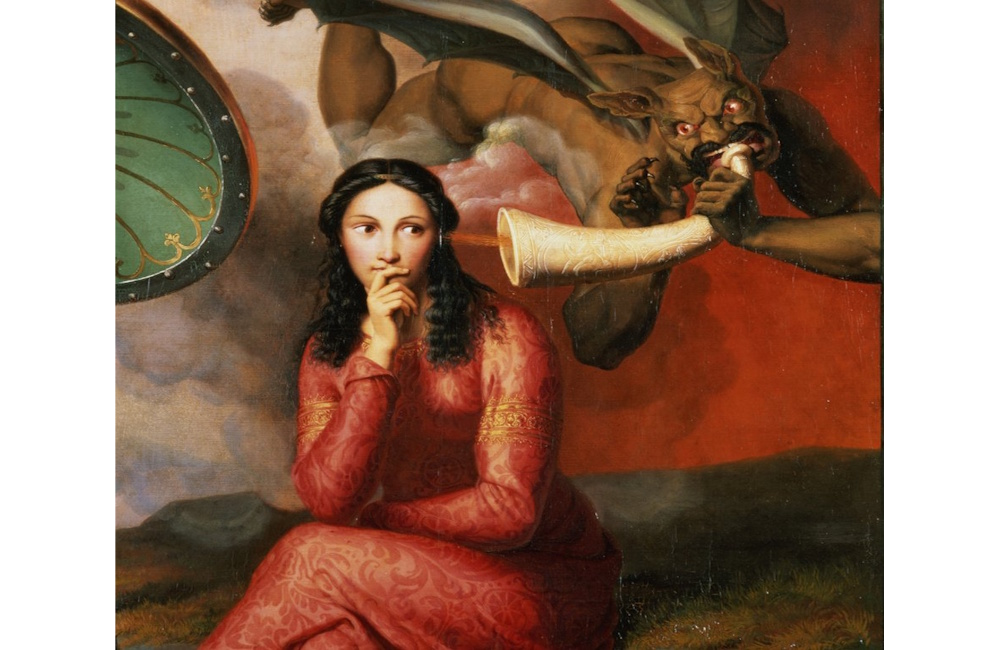
False teachings, secret knowledge, and distorted doctrines serve as warnings of how the devil works to confuse and ensnare. Satan does not appear as a monster; he comes as an angel of light, offering what seems like wisdom or truth. He quotes Scripture but twists its meaning. He acknowledges God but denies his Son. He offers religion but not redemption.
By recognizing these deceptions and remaining steadfast in Christ, believers can walk securely in the light of salvation, confident in the redemption offered through his sacrifice. The cross stands as both warning and invitation: warning against every attempt to reach God through any other means, and invitation to all who would receive the free gift of salvation through faith in Christ alone.