
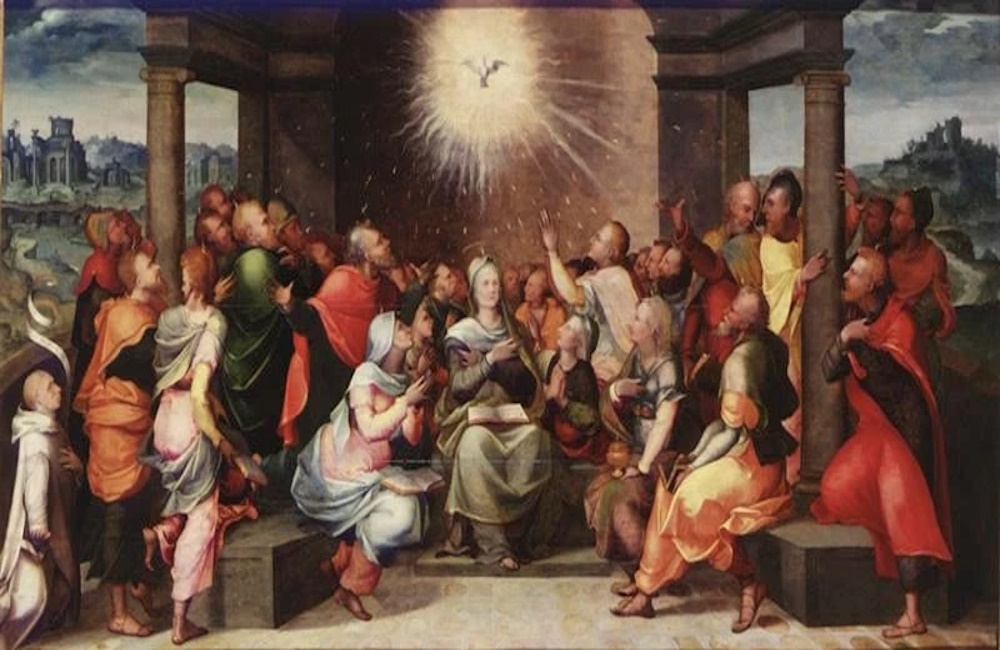
The Promise of the Advocate in John’s Gospel
To demonstrate from the Gospel of John that its prophecies and promises do not refer to Mohammed, we need to closely examine the context and specific descriptions of the figures mentioned by Jesus. Islamic scholars often cite passages such as John 14:16, 26; John 15:26; and John 16:7-14, claiming these refer to Mohammed. However, a careful analysis reveals that these references point to the Holy Spirit rather than a human prophet like Mohammed. The context of these passages shows Jesus speaking to His disciples during His final hours before the crucifixion, preparing them for His departure and assuring them of continued divine presence and guidance.
The Spirit of Truth: A Perpetual Presence
In John 14:16-17, Jesus promises His disciples another Advocate, the Spirit of truth, who will be with them forever. This promise indicates that the Advocate is not a temporary figure but a perpetual presence among believers. The term “Spirit of truth” clearly describes a non-physical entity, further distinguishing this figure from any human being, including Mohammed. The Greek word “Parakletos” refers to one who comes alongside to help and counsel. Jesus emphasizes that this Advocate will dwell within believers, a characteristic impossible for any human prophet to fulfill. Mohammed, who lived centuries later and died in 632 AD, could not be “with them forever” in the way Jesus describes.
The Holy Spirit as Teacher and Reminder
John 14:26 offers more clarity, as Jesus explicitly identifies the Advocate as the Holy Spirit. The role of the Holy Spirit is to teach and remind believers of Jesus’ teachings, which aligns with the role of a spiritual guide rather than a new prophet bringing new revelations. Jesus states that the Holy Spirit will teach believers “all things” and remind them of everything He has said. This function is fundamentally different from what Mohammed claimed to do. Mohammed presented himself as bringing a new revelation, the Quran, which in many ways contradicts the teachings of Jesus. The Holy Spirit, by contrast, does not introduce new doctrine but illuminates and reinforces what Jesus already taught.
A Witness to Jesus, Not a New Framework
In John 15:26, Jesus mentions that the Advocate, whom He will send from the Father, is the Spirit of truth who proceeds from the Father. This figure’s primary role is to testify about Jesus, emphasizing a divine origin and purpose. The focus is on bearing witness to Jesus’ message, not on introducing a new religious framework. The Advocate comes to magnify Christ and confirm the truth of His claims. Mohammed, however, positioned himself as the final and greatest prophet, effectively placing himself above Jesus in authority. The Quran denies the crucifixion and resurrection of Jesus, the very events the Holy Spirit was sent to confirm.
The Work of Conviction and Glorification
John 16:7-14 provides further details about the work of the Advocate. Jesus explains that it is beneficial for Him to go away so that the Advocate can come. The Advocate will convict the world concerning sin, righteousness, and judgment. This role of convicting hearts and minds is traditionally understood as the work of the Holy Spirit. Additionally, the Advocate, described as the Spirit of truth, will guide believers into all truth, speaking only what He hears and declaring what is to come. Importantly, the Advocate will glorify Jesus by taking from what is Jesus’ and making it known to believers. This passage reinforces that the Advocate’s purpose is to continue the work of Jesus, maintaining the continuity of His message rather than introducing a new one.
Conclusion: The Holy Spirit, Not a Human Prophet
The passages from the Gospel of John collectively indicate that the Advocate Jesus speaks about is the Holy Spirit. Described as a non-physical entity sent to dwell within believers, the Holy Spirit’s role is to teach, remind, and glorify Jesus. The characteristics and roles assigned to the Advocate in these passages do not align with those of a human prophet like Mohammed. Instead, the Spirit of truth operates in the spiritual realm, ensuring the presence and teachings of Jesus remain with believers forever. The perpetual indwelling, the function of glorifying Christ, and the divine origin of the Advocate all point conclusively to the Holy Spirit, not to any future human messenger.